Why Proper Drainage Planning Can Make or Break Your Construction Project
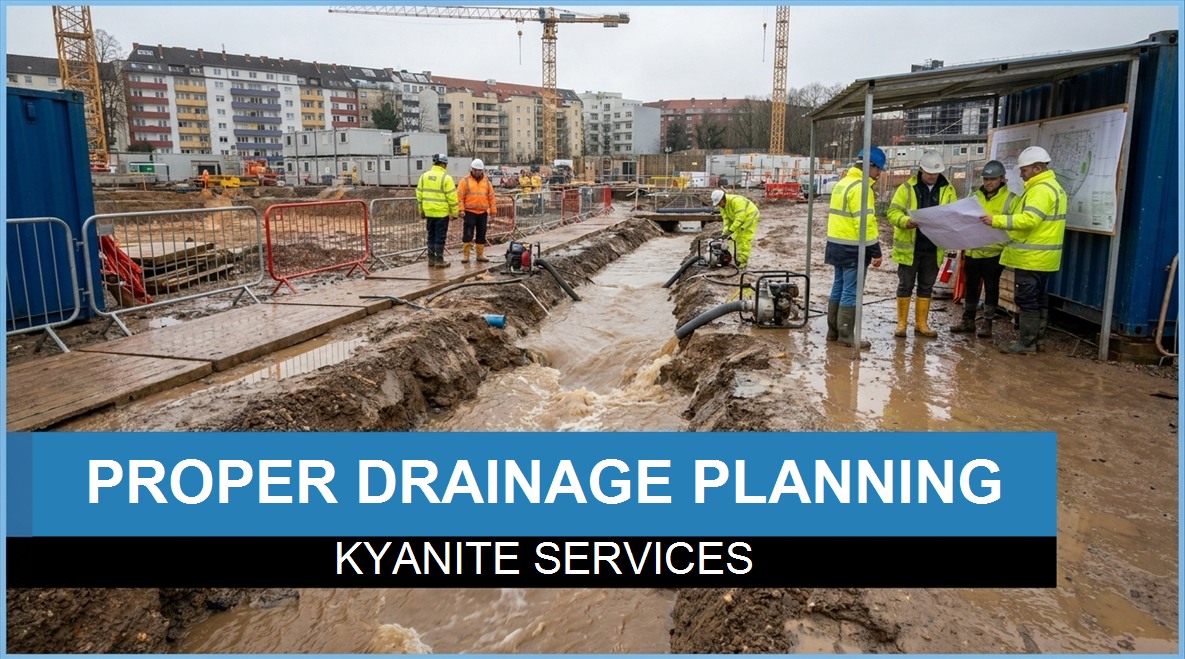
Construction projects often lose time when water management is treated as a problem to fix later. Pools of water around work areas, blocked waste routes and undersized temporary systems can slow access, create safety risks and increase costs. That is why construction site drainage should never be an afterthought.
For years, Kyanite Services has supported UK construction projects with temporary site services, and one lesson is consistent: good water management planning early in the project makes delivery easier. Drainage is not only about moving water away. It is about keeping the project safe, compliant and moving without avoidable disruption.
"Drainage planning protects more than the ground. It protects access, welfare, compliance and programme certainty."
Kyanite Services Site Delivery Team

Poor Drainage Creates Problems Faster Than You Think
On an active site, heavy rain and constant movement can turn a small drainage issue into an operational problem quickly. Water that is not controlled can affect access, material storage, welfare areas and temporary utilities.
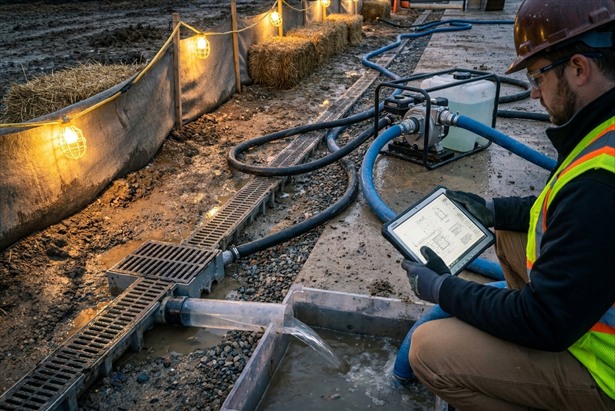
 Flooded access routes causing delays
- Standing water increasing slip risk
- Damage to equipment and stored materials
- Extra pressure on temporary utility systems
- Environmental impact from uncontrolled run-off
Minor drainage issues can become expensive delays if they are left unresolved for weeks. Early assessment gives teams a practical way to prevent that escalation.
Why Early Planning Saves Time and Cost
Drainage planning should happen before machinery is brought in and cabins are installed. Estimating how water will move across the site helps create a system that fits the actual project rather than a reactive fix after the first problem appears.
Site size and layout: Larger projects may need several collection points, planned discharge routes and phased drainage controls as the layout changes.
Expected weather exposure: Open sites and exposed programmes need stronger protection during periods of heavy rain.
Workforce requirements: Temporary sanitation services, welfare units and waste routes all rely on effective drainage to keep working areas usable and hygienic.
Temporary Systems Need Long Term Thinking
Temporary does not mean basic. Temporary drainage solutions need to perform across different project phases, not just during initial setup.
Water demand and wastewater requirements can change as worker numbers increase, facilities move and ground conditions alter. A reliable temporary system should allow for maintenance, increased capacity, UK regulatory compliance and safe wastewater disposal.
The Connection Between Plumbing and Site Performance
Contractors often focus heavily on power while underestimating temporary plumbing and drainage. In practice, plumbing, drainage, welfare water and waste management all work together. Planning them as one system usually results in fewer interruptions and a cleaner operational setup.
Reliable Planning Keeps Projects Moving
Successful construction projects rarely depend on one major decision. They depend on practical decisions made early, and drainage planning is one of them.
Kyanite Services provides tailored support for construction teams, including site assessment, installation, monitoring and ongoing maintenance. With properly planned temporary drainage services, projects can reduce delay risk, improve working conditions and use systems designed around real site requirements.
If you are planning a new project or need to review an existing setup, contact Kyanite Services for practical site drainage and temporary utilities support.