


Good Water Management in Construction: Best Practices for Safer, Compliant Worksites
Water is a fundamental part of construction, but unmanaged water can quickly create safety incidents, compliance breaches, and costly delays. Effective drainage planning is a core site control that protects people, programme, and build quality from day one.
On active projects, standing water can soften ground, erode materials, damage working areas, and increase slip risk. A practical approach to water management keeps workfaces stable and helps teams maintain safe, consistent output through changing site conditions.
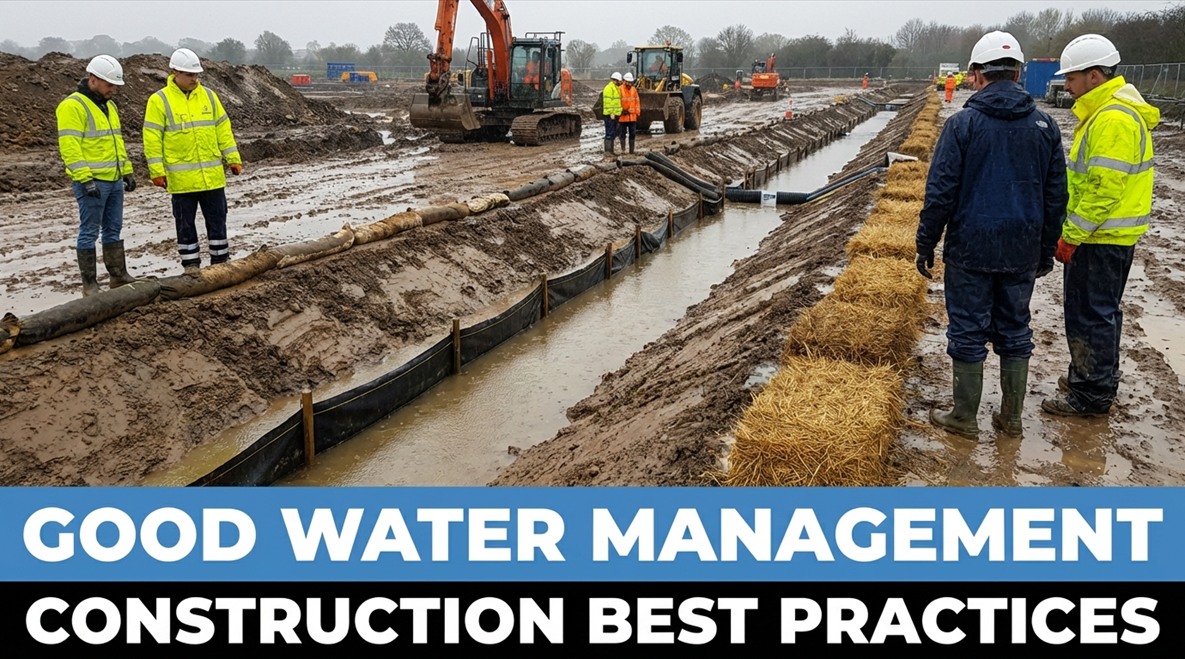
"Good drainage is not a reactive fix. It is planned protection for safety, compliance, and programme certainty."
Kyanite Services Site Delivery Team

Construction site drain management starts with identifying all water sources, including rainfall, groundwater, and surface runoff. Once mapped, teams can implement temporary and permanent flow routes that prevent pooling and protect critical zones.
Strong planning includes debris filters, silt controls, and routine inspections to make sure systems stay effective as excavation depths, access paths, and temporary facilities change during the project lifecycle.
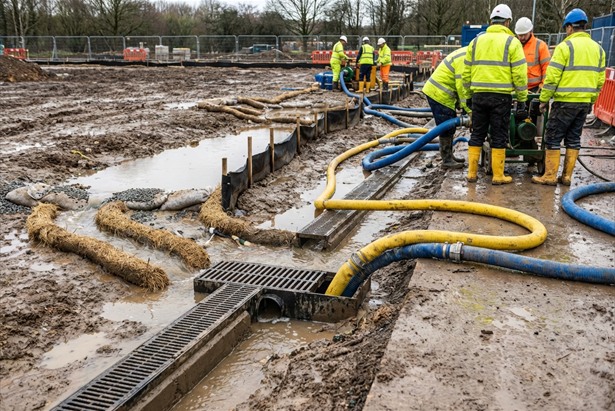
 Ground and water flow assessment before setup
- Clear temporary and permanent drainage routes
- Silt traps and debris filters to protect drains
- Routine checks and maintenance of drainage assets
- Well-drained welfare unit locations for hygiene and safety
- Alignment with UK environmental and safety standards
Best Practices for Safer, Compliant Worksites
1. Identify water risks early: Build drainage planning into pre-construction reviews so controls are in place before heavy activity begins.
2. Keep access and working zones dry: Protect haul routes, storage areas, and welfare access to reduce disruption and incident risk.
3. Protect surrounding environments: Use filters, traps, and planned discharge routes to reduce contamination and erosion impact.
4. Maintain drainage performance: Inspect and clear systems frequently so temporary solutions continue to perform in poor weather.
5. Integrate welfare unit drainage: Place welfare areas on stable, well-drained ground to support safe and hygienic site conditions.
6. Review as the project evolves: Update the drainage plan whenever layouts, levels, or temporary utilities are adjusted.
Effective water management creates long-term value through fewer delays, reduced repair costs, stronger compliance, and safer daily operations. If you need practical support on site drainage and utilities planning, contact Kyanite Services for project-ready guidance.


