Common Electrical Hazards on Construction Sites and How to Avoid Them
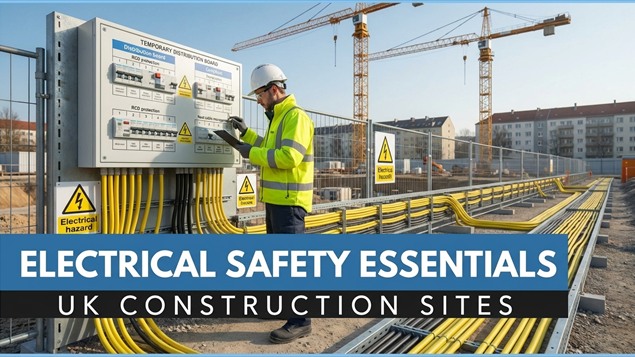
Electrical hazards are among the most serious risks on construction sites across the UK. Many of them are preventable when the temporary setup is planned, installed and supervised properly.
Whether you are managing a large commercial build or a smaller residential project, understanding the risks around construction site electricity is the first step to keeping your crew safe and your programme on track.
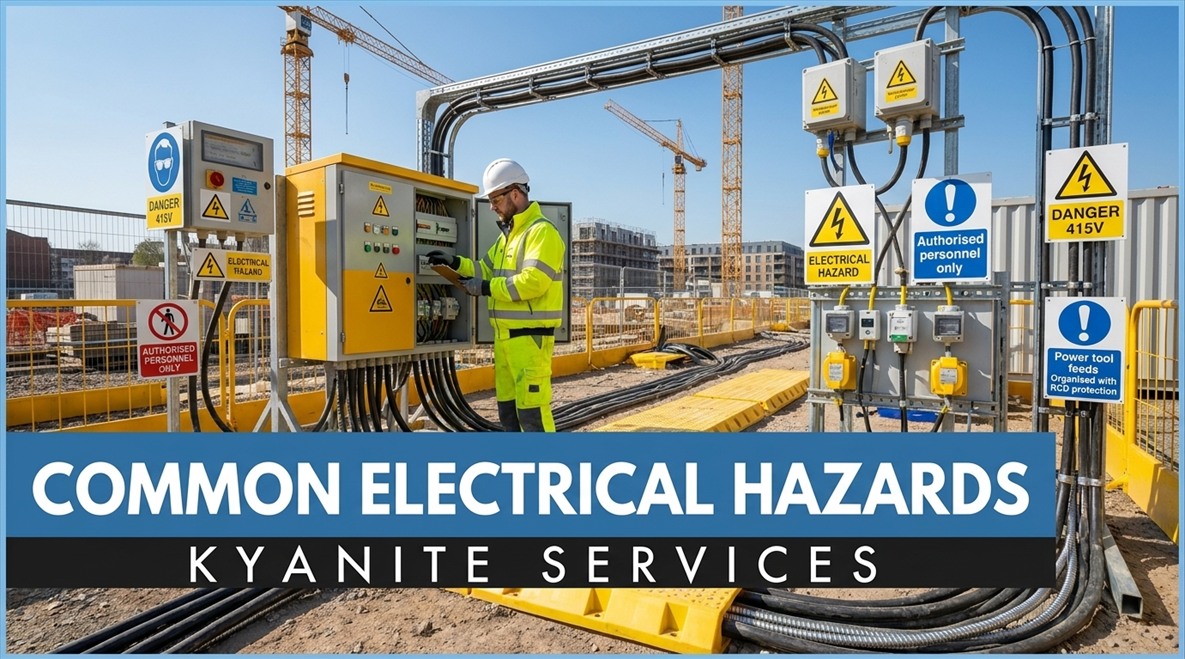
"Electrical safety on site is not something to figure out as you go. It needs to be designed, installed and maintained from day one."
Kyanite Services Electrical Team

Damaged or Poorly Maintained Cables
On a busy site, cables take a beating. They can be driven over, caught under equipment or left exposed to the elements. Damaged cables create serious electric shock and fire risks.
Regular inspection matters. Any cable showing wear, fraying, crushing or other damage should be taken out of use immediately. This is especially important with temporary electricity supply setups, where cables may be moved and repositioned as the site changes.
Inadequate Temporary Electrical Installations
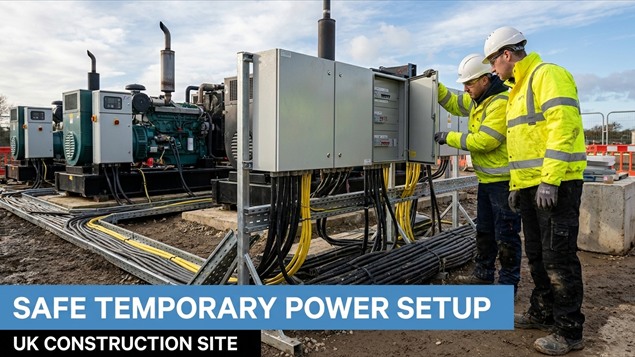
A poorly planned temporary electrical installation can introduce major risk. Undersized cables, overloaded circuits, missing RCD protection and non-compliant distribution boards are not just hazards. They can also create avoidable compliance issues.
A proper temporary electrical installation should be designed and installed by qualified electricians who understand live construction environments and current UK requirements.
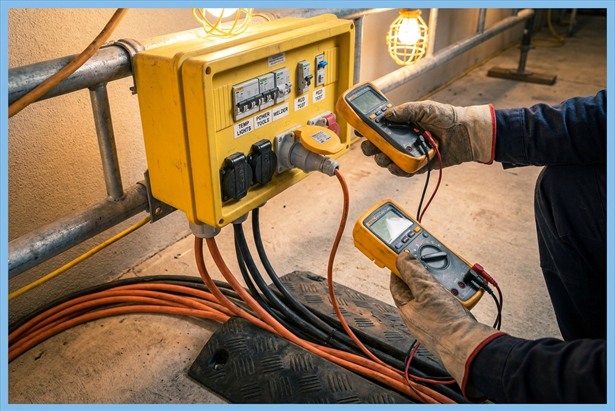
 Routine cable inspections and removal of damaged leads
- Competent design of temporary electrical installations
- RCD protection for high-risk and wet areas
- Outdoor-rated and protected temporary equipment
- Load planning to prevent overloaded circuits
- Qualified supervision and ongoing maintenance
Water and Electricity
Construction sites are exposed environments. Rain, groundwater and wet ground conditions are common, so water near electrical equipment must be managed carefully.
Temporary electrical equipment should be suitable for outdoor use where needed. Distribution boards should be elevated and protected from standing water, and RCD protection should be treated as essential in wet conditions.
Overloaded Circuits
When demand increases on site, with more tools, more machinery or more cabins, there can be pressure to keep adding connections. Overloaded circuits overheat, and overheating can lead to fire.
The right temporary electricity supply should be scaled to real site demand, with room for the project to change. A site power assessment at the start of a project helps prevent this risk before it appears.
Lack of Competent Supervision
Electrical work on construction sites must be carried out and overseen by competent, qualified people. That applies to both permanent systems and temporary electrical installation work.
Using unqualified labour may look cheaper at the start, but it can create safety, compliance and delay risks that cost far more to correct later.
How Kyanite Can Help
Kyanite specialises in temporary electrical installations for construction sites across the UK. From initial power assessment through to installation, monitoring and ongoing maintenance, the team manages the process around safety, compliance and practical site needs.
Certified electricians design solutions for everything from single cabin setups to wider site power distribution. If you are planning a new project or need to review your current setup, get in touch with Kyanite Services for a free quote.